Generative Engine Optimization in 2026: A Field Report from Real Client Data
I have a client who ranks Position 1 on 30+ ChatGPT prompts and Position 0 on the matching Google search. Same site. Same content. That gap is the most important thing in SEO right now, and almost nobody is writing about it correctly.

In this article10 sections
Want to show up in AI answers? See our AI search optimization services.
I have a client who ranks Position 1 on more than 30 ChatGPT prompts about their specialty and does not rank at all on traditional Google for the matching typed search query (1,300 monthly volume, US database). Same site. Same content. A weaker competitor ranks Position 30 on the typed term and is invisible in ChatGPT.
That gap is the most important thing happening in SEO right now, and almost nobody is writing about it correctly.
Google published its official guidance on optimizing for AI search in May 2026. The guidance is honest, accurate, and incomplete. I have spent six months running real Generative Engine Optimization (GEO) work for clients, built a proprietary tool that captures query fan out, and watched SEMRush Brand Performance data move week by week. This is the field report.
TL;DR: AI search and traditional Google search measure different things, and most SEO programs are flying blind on half the picture. The playbook below is what I am actually running for clients right now, not theory. Every chart in this piece comes from real client data.
The Real Numbers#
The regional veterinary client I have been working with appears in SEMRush Brand Performance reports like this across both Google AI Mode and ChatGPT. Five competitors are included for context. Brand A is the client, whitelabeled.
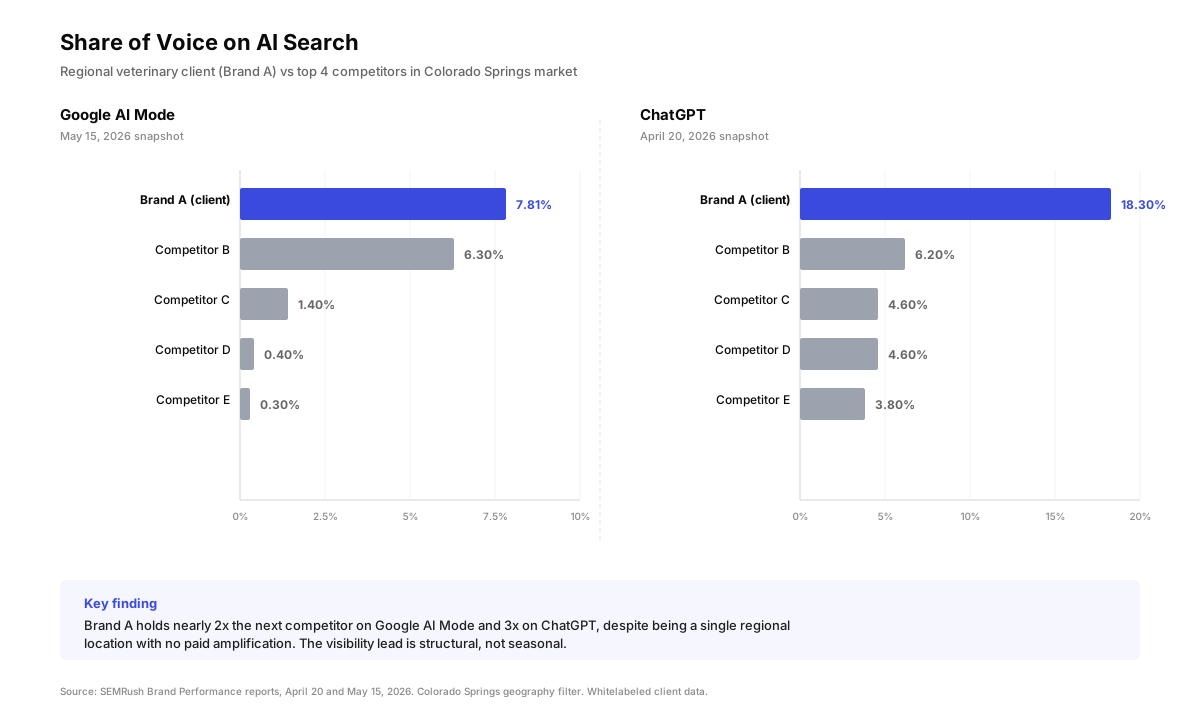
The headline metrics from the May 15, 2026 reports:
- Share of Voice on Google AI Mode: 7.81%. Roughly 2x the next closest competitor.
- Share of Voice on ChatGPT: 9.60%. Highest in the market across the panel.
- Average Position in AI answers: 2.67 on AI Mode, 2.87 on ChatGPT. When AI lists vets, Brand A is usually first or second.
- Citations in a 30 day window: 146 on AI Mode, 235 on ChatGPT.
- Top cited individual page: 52 citations on a single service page.
- Domain citation rank on ChatGPT for the entire local query universe: #1. 14.8% of all citations across the entire query panel.
That last metric bears repeating. For the local vet query universe in this market, ChatGPT cites this client's domain more than any other source. More than directory listings. More than competitor sites. More than third party review aggregators. A regional small business has captured the top citation slot on one of the most heavily used consumer AI search engines.
And the position is stable, not a momentary spike:
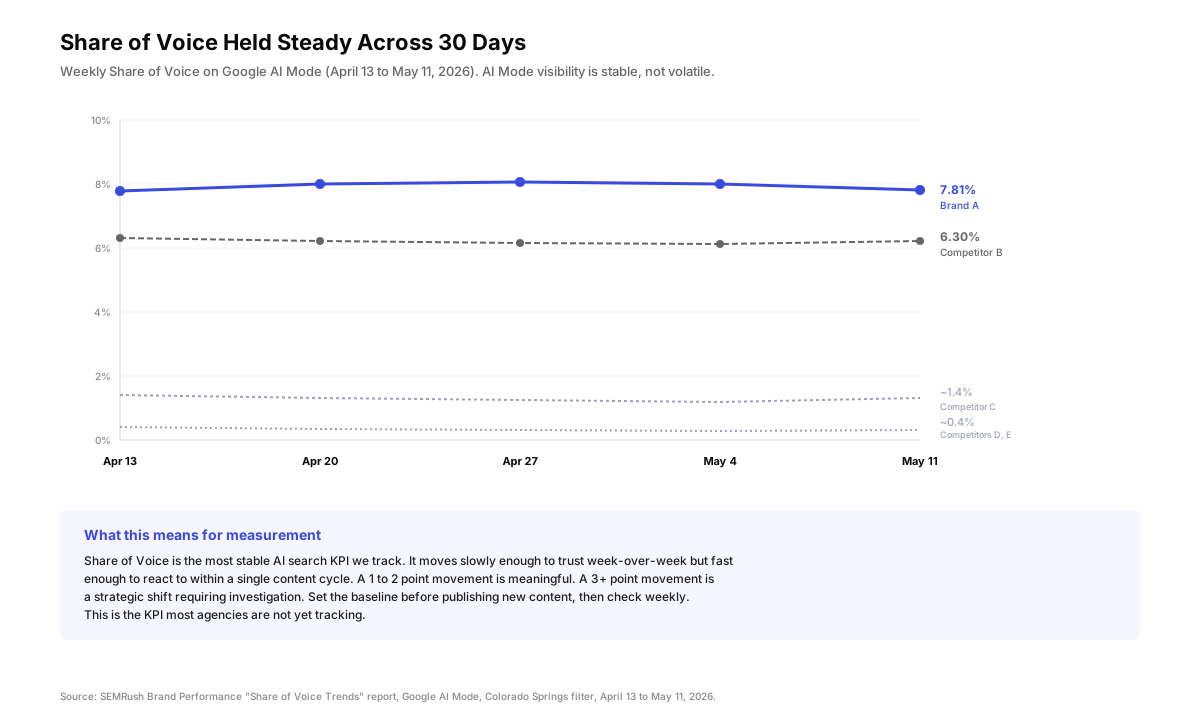
This is the operating reality of AI search in 2026 for businesses that actually invest in it. The visibility is real, the citations compound, and the position is stable enough to plan around. Most agencies are not yet tracking any of this.
Update, July 2026: The Method Just Produced a Live AI Overview Citation for This Site#
This report was originally built on client data. Two months after publishing, the same method showed up on my own site. When I ran the Google query "best seo company in hampton roads virginia" on July 19, 2026, the AI Overview at the top of the results cited two Ravana pages among its sources, my honest comparison of Chesapeake SEO companies and my SEO services page, and listed Ravana among the three agencies it recommended. AI Overviews shift and personalize, so I am reporting that as one dated observation, the same way I would report a single Brand Performance snapshot, not as a permanent ranking.
The passage Google lifted, nearly verbatim, is a short answer block: a question phrased exactly the way a buyer types it, in a real h2, followed by one self contained paragraph that names the business, the full service area, and the differentiators. That is Move 3 from the playbook below, working in the wild for a two person agency against competitors many times its size.
Two details worth copying. First, the overview described my service area exactly as my page prose described it, down to repeating the three cities my old paragraph happened to name. The fix was rewriting the visible paragraph to name every city we serve. Schema alone never moved that needle; the prose the machine could quote did. Second, the pattern scales. The same block structure now runs on every city page I publish, from Suffolk SEO to Newport News web development, because a citable passage has to exist before any engine can cite it.
The Contradiction That Rewrites SEO Measurement#
The same client that dominates AI search does not rank at all on traditional Google for the obvious typed search query about their specialty. A competitor without their depth of authority ranks Position 30 on that typed term.
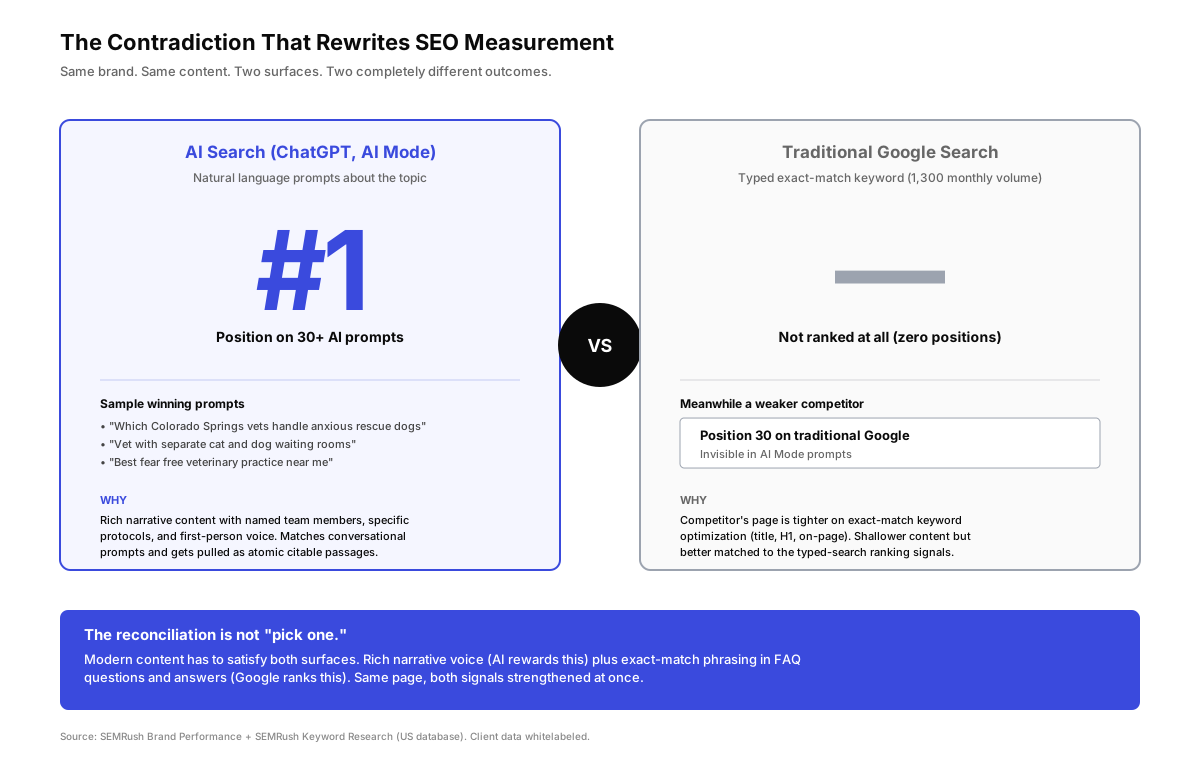
The reason is straightforward and important. Natural language AI prompts ("which Colorado Springs vet handles anxious rescue dogs without sedation") match rich, specific, narrative content. Typed search ("fear free certified") matches whichever competitor has the tightest keyword optimization on the exact phrase. The two surfaces reward different content shapes.
AI engines pull from atomic, citable passages with first person voice and specific detail. Traditional Google still rewards exact match optimization with strong backlinks. Modern content has to satisfy both because both will keep mattering for years.
The reconciliation is not picking one. The reconciliation is one page that does both jobs at once: rich narrative voice in the body (AI engines cite this) plus an FAQ section that uses the exact typed phrase in the questions and answers (traditional Google ranks this). Same page. Both surfaces fed.
This is the practical playbook I am running for this client this quarter. We are not rewriting the service page to be keyword stuffed. We are adding an FAQ section with 10 question and answer pairs that use the precise typed phrase in natural language inside the answers. The AI engines see more atomic citable passages. Traditional Google sees the exact phrase in indexable content. Both signals strengthen at once.
The principle generalizes: AI first content gets cited but may not rank for typed search. SEO first content may rank but rarely gets cited. Modern content needs to satisfy both.
What AI Engines Actually Do (the Plume Data)#
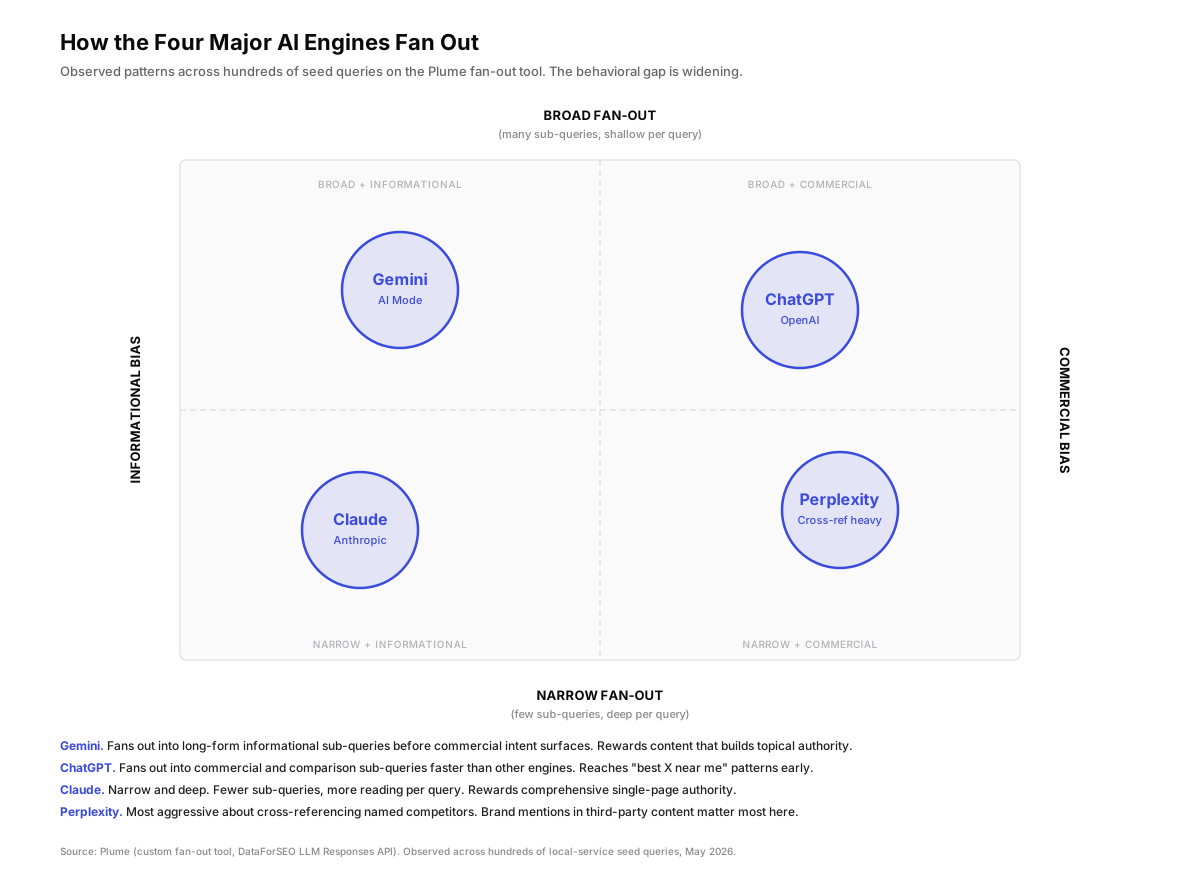
I built a tool earlier this year called Plume that hits Gemini, ChatGPT, Claude, and Perplexity through DataForSEO's LLM Responses API and captures the actual fan out queries each engine fires internally to ground its answer. Not simulated. The real array each engine returns in its grounding metadata, originally exposed via Google's groundingMetadata.webSearchQueries field on the Gemini side and equivalent web search instrumentation on the others.
The four engines fan out in measurably different ways. Patterns I have seen across hundreds of seed queries:
Consensus subqueries are citation magnets. When the same subquery appears across three or four engines for a given seed, that subquery is where citations concentrate. Find the consensus subqueries for your topic and build content that answers each one cleanly. This is the practical operational unit of GEO work.
Brand mention subqueries are common and underappreciated. When a user asks "best veterinary practice in Colorado Springs," AI engines commonly fan out into subqueries naming specific competitors ("Bear Creek Veterinary reviews," "Pine Creek Vet services"). If your brand is not in the citation graph for those competitor subqueries, you are likely absent from the synthesized answer even if your direct brand visibility looks fine.
Local intent triggers different patterns than national intent. Adding a city to a seed query shifts the fan out toward map pack queries, neighborhood subqueries, and competitor name subqueries. National seeds produce more "how to" and product comparison subqueries. This affects content strategy for local versus national businesses in opposite directions.
This is the kind of signal Google's guidance does not surface because Google is in the business of selling search to end users, not surfacing operational data to SEO practitioners. The fan out structure is real, observable, and exploitable.
How AI Engines Pick Their Sources#
The SEMRush Brand Performance reports include the full citation graph: which domains and which specific pages AI engines pull from when generating answers. The two platforms cite very differently.
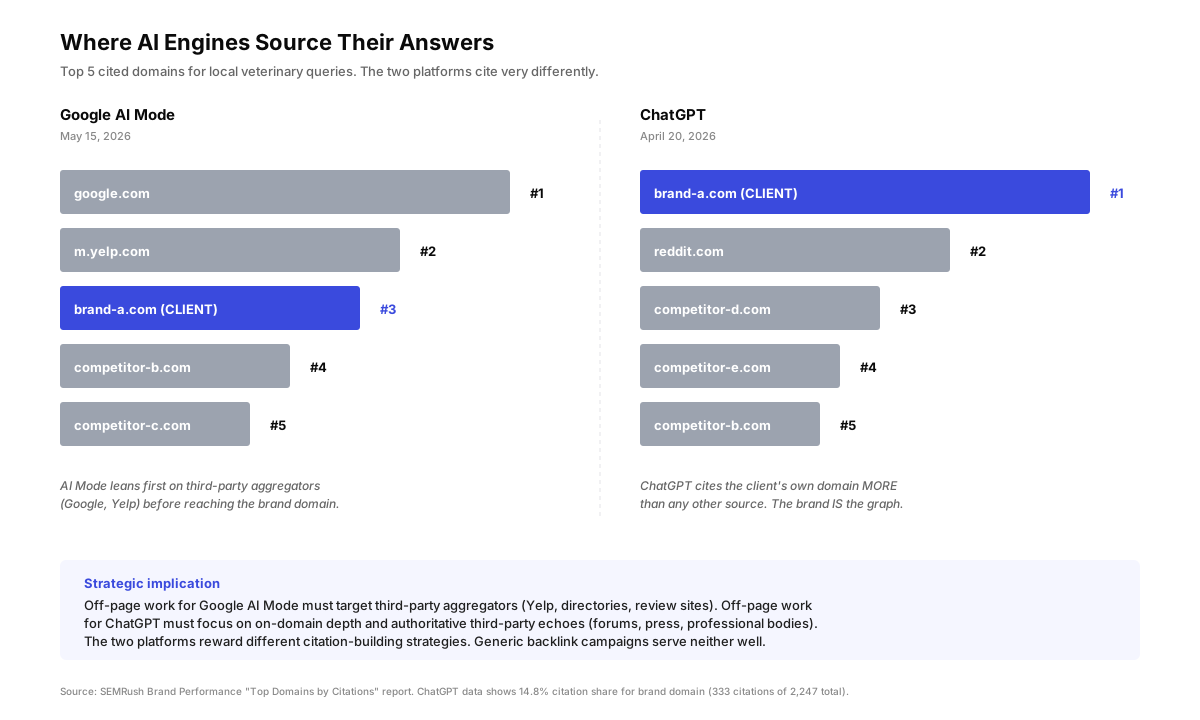
Google AI Mode leans on third party aggregators first (Google itself, Yelp), then reaches the brand's own domain. ChatGPT inverts the pattern: it pulls the brand's domain as the top source, then reaches reddit, competitor domains, and industry directories. The strategic implication is direct. Off page work for AI Mode has to target aggregators and directories. Off page work for ChatGPT has to focus on depth within your own domain and authoritative third party echoes.
The citation pattern on the domain itself is just as concentrated:
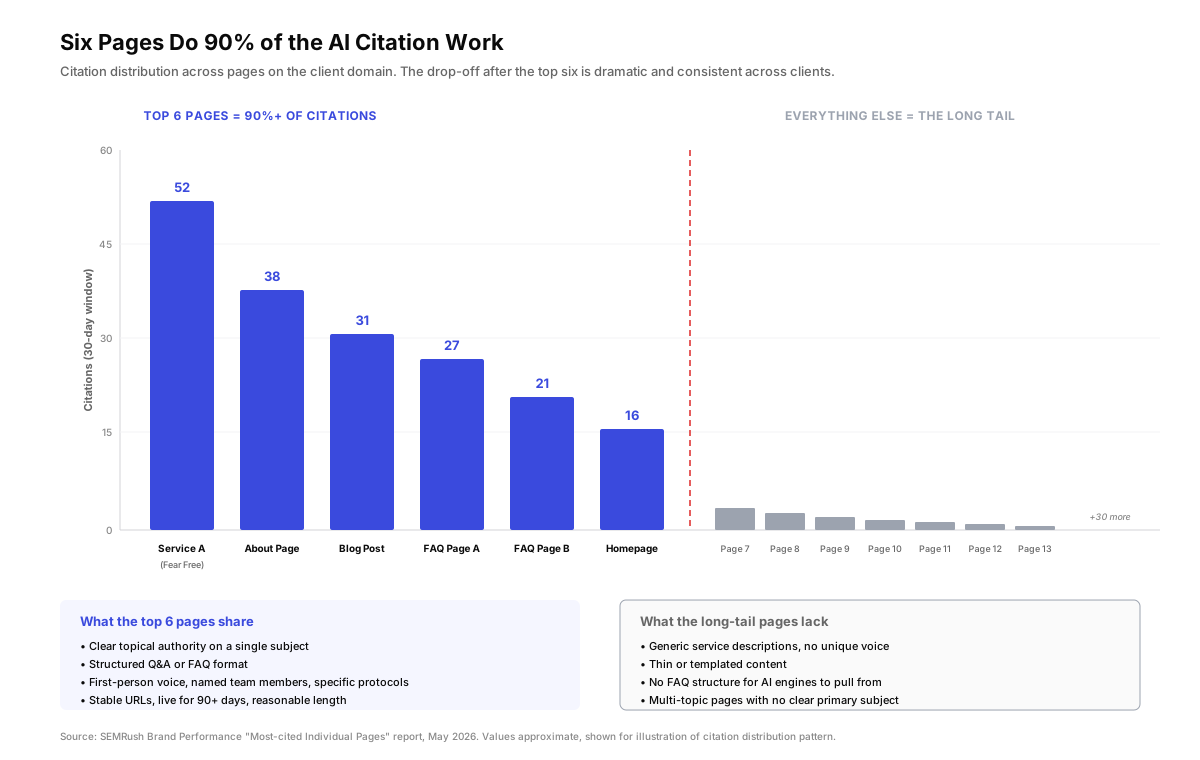
Six pages do nearly all the work: a single service page, the About page, one blog post, two FAQ pages, and the homepage. Not the dozen other service pages. Not the team page. Not the contact page. The implication is that AI engines weight certain page types far more than others.
The pages that get cited share five characteristics:
- Clear topical authority on a single subject. Pages that cover many topics rarely get cited.
- Structured Q&A or FAQ format. The format itself signals citability.
- First person voice and authentic detail. Named team members, specific protocols, real tools, real numbers.
- Reasonable length. Not chunked, not bloated. Sized right for the topic.
- Stable URLs that have been live 90+ days.
This is the citation graph operating system. Without visibility into it, GEO work is guessing. With visibility into it, the next set of moves becomes obvious: shore up the pages doing the citation work, fix the gaps on the pages that should be cited but are not, and target the specific outside sources AI engines actually use.
The Playbook (7 Moves That Actually Work)#
This is what I am running for clients right now. Everything below is producing measurable results in active engagements, not theory.
1. Audit your citation graph first. Use SEMRush Brand Performance (or BrightEdge, Conductor, or Ahrefs as it rolls out AI features) to see which of your pages are actually being cited. Most agencies are not running this yet. The first run will surprise you. Reconcile your content strategy to the real citation pattern, not the one you assumed.
2. Find the consensus subqueries. Run a fan out tool on your top three to five seed queries. The subqueries that appear across multiple engines are your priority targets. Without a tool, the next best move is to ask each AI engine the seed query yourself and read the cited sources carefully.
3. Build atomic citable passages. The single highest leverage content format in 2026 is the FAQ section with FAQPage schema, not because Google requires it (Google explicitly says schema is not required) but because the Q&A format produces exactly the atomic passages AI engines pull from. Pages with 8 to 15 strong FAQ entries get cited far more than the same content as flowing paragraphs.
4. Use first person voice and specific detail. "I have audited fifty Hampton Roads sites and here is what I see" gets cited dramatically more than "Studies show that website audits reveal common issues." Named people, specific protocols, real tools, real numbers. The defensible moat against AI generated commodity content is content that demonstrably came from a human with firsthand experience.
5. Strengthen off page citations on the sources AI actually cites. Most link building advice is generic. GEO requires specific. For local service businesses, that usually means Google Business Profile completion, Yelp profile and review work, the industry specific directories AI engines actually weight (Avvo for legal, Healthgrades for medical, Houzz for home services), regional press coverage. Stop chasing generic SEO directories.
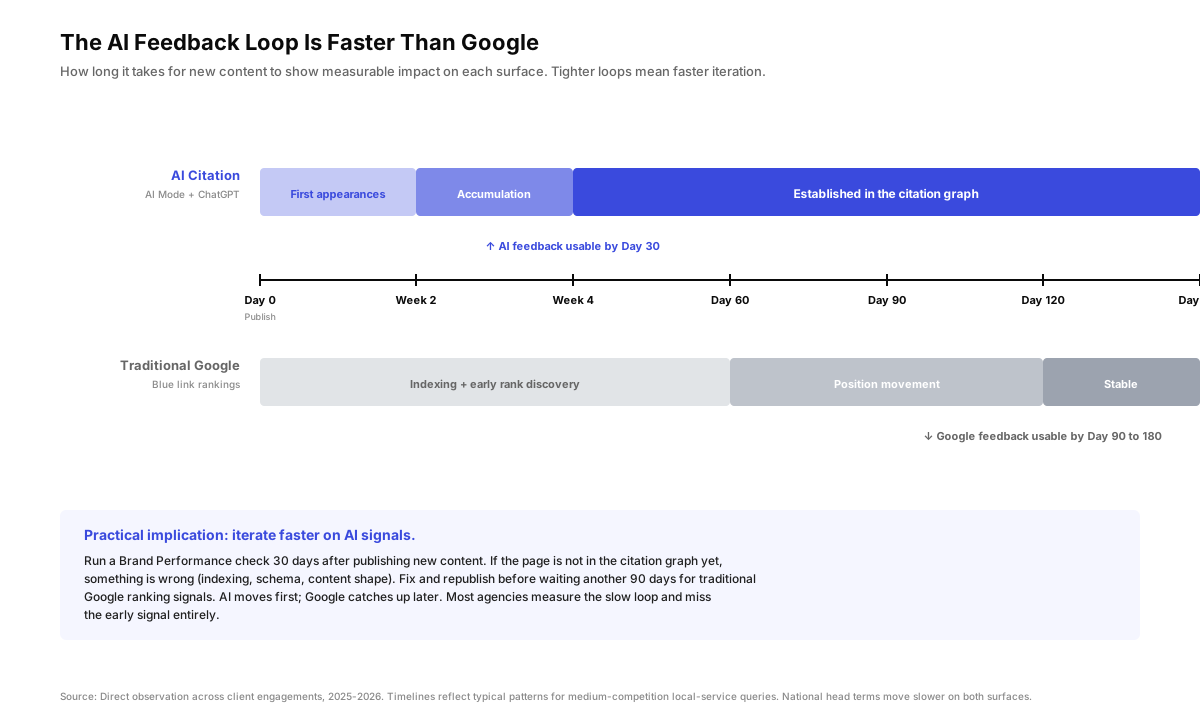
6. Track AI specific metrics alongside traditional ones. Baseline before publishing: Share of Voice on Google AI Mode and ChatGPT (SEMRush, 30 day window), Average Position in AI answers, Citation Count per domain, top cited pages on your domain, top cited competitor pages, sentiment driver mentions. The AI feedback loop is faster than the Google feedback loop, which means you can iterate faster on what is and is not working.
7. Audit your brand sentiment. Brand Performance reports include what AI engines actually say about your brand, with frequency counts on each statement. This is the most uncomfortable client deliverable I produce and one of the highest leverage ones. The regional client's AI sentiment data flagged specific perception weaknesses (premium pricing, limited after hours availability, occasional communication gaps). We are running content specifically to neutralize each one with factual context. If AI is summarizing those concerns to your prospects, addressing them in content is the work.
Methodology#
For practitioners who want to replicate this analysis on their own clients, here is the data infrastructure I am running. This is the part most "AI search optimization" content skips, and it is the part that makes the rest reproducible.
Brand Performance reports. SEMRush AI Mode and AI Search Brand Performance for the client domain, weekly, with the relevant geography filter applied. Two platforms tracked: Google AI Mode and ChatGPT. The cost is justifiable for any business spending serious money on SEO. The data exposed in each report: Share of Voice over time, Average Position in AI answers, Mentions Distribution, Sentiment Drivers (positive and negative), Top Cited Domains, and most cited individual pages.
Query fan out capture. A custom tool that hits Gemini, ChatGPT, Claude, and Perplexity through DataForSEO's LLM Responses API. The endpoint returns the engine's actual fan_out_queries array (the subqueries each engine issued to ground its answer) plus the answer text, citations, and raw payload. For practitioners without their own tool, DataForSEO's API is directly accessible. The cost per fan out run is a few cents.
Traditional SEO data. Standard SEMRush Keyword Research toolkit calls (phrase_these, phrase_questions, phrase_related, domain_domains). Used to reconcile AI search visibility against traditional Google ranking data for the same query universe.
Sampling cadence. Brand Performance pulls weekly. Fan out tool runs for top 5 to 10 seed queries per client, monthly. Traditional SEO data refresh weekly.
Limitations to acknowledge. Brand Performance reports use a fixed query panel. Changes to the panel between reports introduce noise. AI engine output is not fully deterministic, so single snapshot citation lists can shift across reports. We mitigate this by looking at trends across 4 to 12 weeks and prioritizing patterns that are stable across multiple report runs. The data described here reflects the May 15, 2026 report run with corroboration from the April 20, 2026 report run on the same panel.
The methodology is reproducible. Any agency willing to pay for the tools and run the analysis can do this. As of mid-2026, very few are.
What You Can Safely Ignore#
Google's mythbusting section is correct and worth respecting. Things that do not work:
- llms.txt files and "special" markup. No measurable effect in any client work.
- "Chunking" content into tiny pieces. AI engines understand pages that cover several topics.
- Rewriting content "for AI." Write for humans. AI handles natural language variation.
- Buying "AI mentions." Same problem as buying backlinks.
- Overfocusing on schema. Useful for rich results, helpful at the margin for AI citation eligibility, not a primary lever.
Three of my own:
- "ChatGPT SEO" courses. Most are repackaged SEO content with AI buzzwords. Default to skeptical.
- "AI visibility audits" that just screenshot ChatGPT answers. A real audit pulls Brand Performance data, runs a fan out tool, audits the citation graph, and benchmarks against your top three competitors.
- Treating GEO as separate from SEO. Google is right on this. Same discipline, expanded surface, expanded metrics.
What's Coming Next#
Four trends I expect to matter more over the next 12 months:
The citation graph will tighten. AI engines are concentrating citations on a shrinking set of authoritative sources per topic. The window to be in that set for your category is shorter than most operators realize.
Variance across engines will widen. Targeting strategies will need to be engine specific in ways that do not really apply today.
Brand Performance metrics will become standard. SEMRush has the lead. By 2027 every serious SEO tool will offer AI brand reporting. Practitioners who built fluency with this data in 2026 will be well ahead.
Local AI search is the open window. The AI Mode and ChatGPT equivalent of map pack visibility is still underbuilt. Local businesses with strong GBPs, real reviews, and structured local content are dramatically overperforming national chains in AI answers right now.
FAQ#
Should I block AI crawlers like GPTBot from my site?
For almost every business, no. Blocking GPTBot means ChatGPT cannot cite you when prospective customers research with AI. The exception is proprietary or paid content you specifically do not want scraped, in which case block targeted crawlers for those paths only.
How long does GEO work take to show results?
New content appears in AI citation graphs within 2 to 4 weeks, faster than traditional Google rank gains for the same content. Brand Share of Voice changes meaningfully over 30 to 90 days. Significant competitive shifts take 90 to 180 days. The feedback loop is tighter than traditional SEO.
What is the single highest leverage move?
For most businesses: add a comprehensive FAQ section with FAQPage schema on your top three to five service or product pages. Use natural language phrasing that matches how real users ask the questions. This produces atomic citable passages and helps traditional Google ranking at the same time.
How important is Google Business Profile for AI search?
For local businesses, very. AI engines pull heavily from GBP signals for local intent queries. Most GBPs I audit are 40 to 60 percent complete, which is competitive opportunity sitting on the table.
How do I tell if my GEO work is actually working?
Track four signals over 90 days: Share of Voice on Google AI Mode and ChatGPT, Citation Count from your domain in AI answers, top cited pages on your site, and traditional Google rankings on your target keywords. If three of four are climbing, you are on track.
If you are running an SEO program in 2026 without integrating AI search into measurement and content strategy, you are flying blind on half the picture. The tools exist. The methodology is becoming clearer every month. The competitive window for being in the citation set is open and tightening.
For Hampton Roads businesses, the GEO program runs as part of our SEO services. For everyone else: run the audit, find the consensus subqueries, build the atomic citable passages, reconcile AI and SEO into the same content, and track the right metrics. If you are running this work and seeing different patterns, I want to hear from you.
Free AI search audit: Run one here.
Related reading:
Want a straight answer on your rankings?
I wrote this, and I am the one who would do the work. Send me your site and I will send back a plain English audit within 48 hours, free, no obligation.
SEO from $750 a month, month to month, no contract. Websites fixed price from $2,500.
Nick Mangubat, founder.Based in Norfolk. You work with me directly.
Related articles

Beyond Keywords: What Modern SEO Actually Rewards in 2026
I work at an SEO agency of 950 people by day and audit Hampton Roads sites by night. Keyword stuffing is dead and E-E-A-T plus AI search readiness are the new game. Here is what actually moves rankings in 2026, written by someone who watches it move.
8 Best SEO Companies in Norfolk, VA (2026)
I checked the registered address of every SEO company in Norfolk, VA. Only two of the eight are actually headquartered here. Pricing, fit, and the honest list.

What Does an SEO Retainer Actually Buy? A Month by Month Breakdown
I see SEO retainers from both sides: I work inside a 950 person agency by day and run my own Norfolk shop at night. Here is a plain, month by month breakdown of what a real SEO retainer buys, what it should never be, and how to audit the one you are paying for right now.