Virginia Beach Tourism Web Design: What Hospitality Sites Actually Need
Sixteen million tourists per year, thirty five miles of coastline, and most Virginia Beach tourism websites are leaving money on the table. Here is what I see on real audits and what hospitality sites actually need to convert.

In this article6 sections
Building a hospitality site? See our Virginia Beach web design services and pricing.
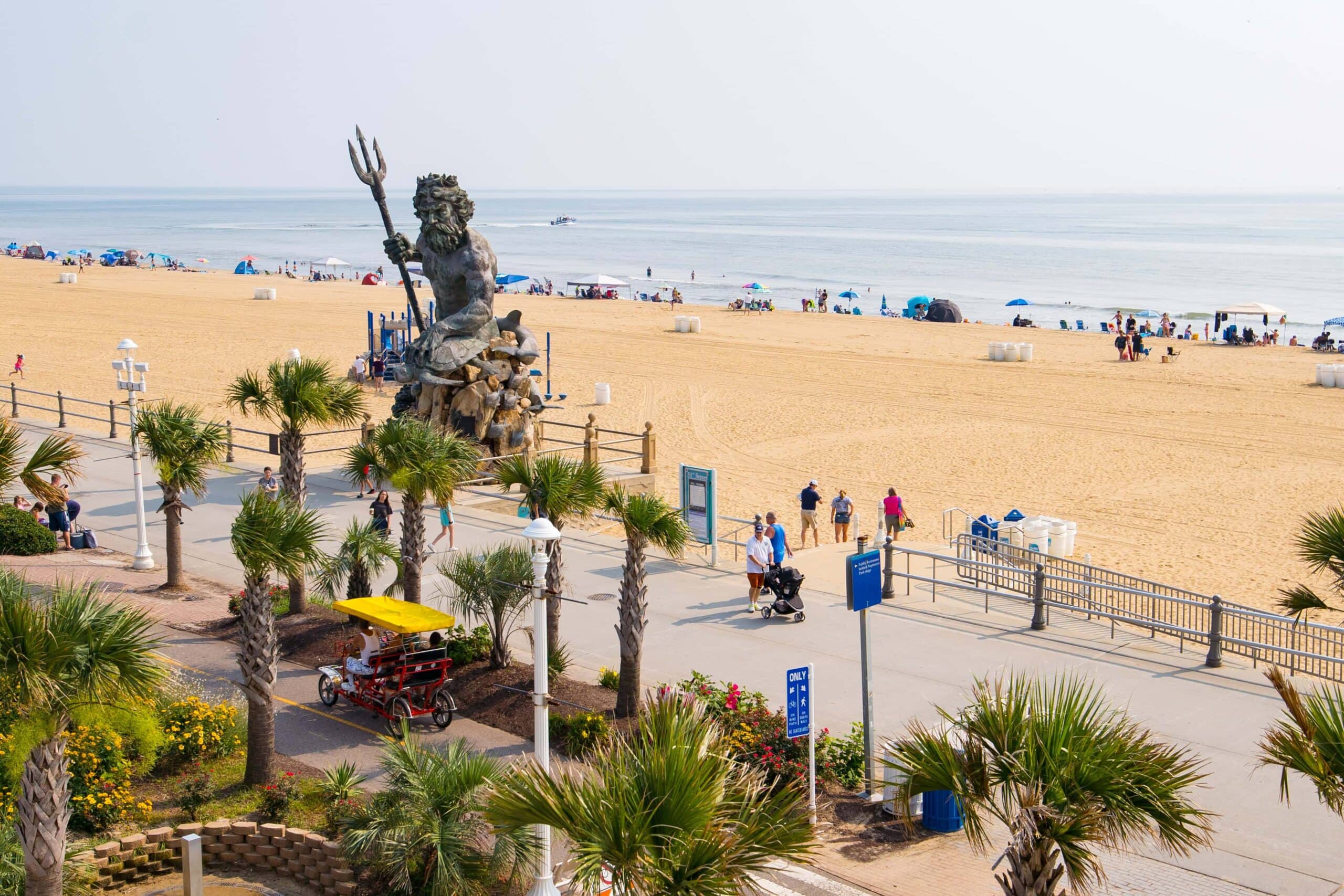
Sixteen million tourists per year, $1.6 billion in annual visitor spending, and most Virginia Beach tourism websites are not built for the audience that actually pays the bills. I live in Norfolk, I drive out to the oceanfront constantly, and I have audited dozens of VB hotel, restaurant, and attraction sites with Raptor.
The pattern is consistent. Beautiful properties with broken digital storefronts.
Need help with a Virginia Beach tourism business website? See our Virginia Beach web development services or request a free site audit.
The Virginia Beach Tourist Is Not One Person#
The biggest mistake VB tourism websites make is treating all visitors as one audience. There are at least five distinct visitor segments, each with different search behavior, different decision drivers, and different content needs.
The Family Beach Vacation (May to September peak). Two parents, two to three kids, four to seven night stay. Price sensitive. Searches for "family friendly hotels virginia beach" and "things to do with kids virginia beach." Decides primarily on amenities and value perception.
The Weekend Getaway (year round, peaks shoulder season). Couples or friend groups from DC, Richmond, and Norfolk area. Two to three nights. Higher per night spend, lower total. Searches for "weekend in virginia beach" and "best restaurants virginia beach." Decides on photos and reviews.
The Convention And Group Travel (year round). Conference attendees at the Virginia Beach Convention Center, family reunions, wedding guests, sports tournaments. Hotel block driven, not free choice. Decides based on what the convention organizer picked.
The Day Tripper (May to October peak). Hampton Roads locals from Norfolk, Chesapeake, Hampton, Suffolk, and the Peninsula. Driving in for the day or evening. Searches for "happy hour virginia beach" and "live music virginia beach tonight." Decides in real time on their phone.
The Adventure And Niche Visitor. Fishing, surfing, kiteboarding, birding at Back Bay, ATV rentals, dolphin tours, parasailing. Specialized search behavior. Decides based on equipment quality, instructor credentials, and authentic local content.
A single tourism website cannot serve all five equally. The good ones pick their target segments deliberately and design around those.
What A Virginia Beach Tourism Website Needs#
1. Sub Two Second Mobile Load Time#
Tourist decision making happens on a phone, often on cellular data, often while walking. A site that takes four seconds to load loses the visitor before they see the first image.
This is technical work, not design work. Server side rendered Next.js or similar, images served in modern formats (WebP, AVIF) with proper srcsets, inlined critical CSS, deferred non essential JavaScript. Test on a real iPhone over Verizon LTE while standing on Atlantic Avenue. If it does not load in two seconds, fix it.
2. Direct Booking Where It Applies#
Hotels: direct booking engine integrated, OTA commissions kept off your books. Restaurants: OpenTable, Resy, or Tock integration, not a "call us" CTA. Attractions: ticketing through Fareharbor, Peek, Bokun, or Xola with mobile checkout. Tour operators: same.
If your website cannot convert a tourist from "interested" to "booked" in three taps, you have a leak.
3. Real Photography Of Your Actual Property#
Stock photos of beaches in Florida, Mexico, or the Outer Banks read as obvious to anyone who actually knows the Virginia Beach oceanfront. Visitors comparing your site to a competitor's notice immediately when the photos do not match the place.
One day of professional photography is usually all you need: property exterior, interior at different times of day, food and drink shots if you are a restaurant, the actual experience if you are an attraction. Real photos beat stock photos by a margin that pays for the shoot in the first month.
4. Reviews From Actual Customers, Displayed Honestly#
Tourists check TripAdvisor, Google, Yelp, and OTA reviews before booking. If your website shows zero reviews while your competitor curates fifty real ones, the competitor wins the trust battle.
Pull real reviews from multiple sources with proper attribution. Use Review schema markup. Display aggregate ratings prominently. Respond to negative reviews in your hospitality voice and link to your responses. Do not fake reviews. Anyone with five minutes can spot fake reviews and it destroys trust.
5. Local Content That Helps The Visitor Plan#
The visitor researching your hotel is also researching restaurants near it, beach activities, kid friendly options, rainy day plans, transportation, parking situations, and the boardwalk events calendar. Tourism websites that provide this local context build trust well before booking.
A "what to do near our property" page or section is one of the highest converting tourism content types. It also ranks for adjacent searches that surface AI Overviews in 2026, sending qualified visitor traffic that the OTAs cannot intercept.
6. Seasonal Content And Hero Rotation#
VB tourism is seasonal. Memorial Day through Labor Day is peak. May and September are shoulder. October through April is off season with different visitor profiles (locals, conferences, weather dependent leisure, holidays).
Most VB tourism websites are static year round with the same summer hero image. That misses every shoulder and off season opportunity. Rotate heroes by season. Build seasonal landing pages. Adjust offers and pricing displays seasonally.
7. Mobile First Booking Flow With Sticky CTA#
Every page should have a clear booking call to action visible without scrolling on mobile. Sticky to the bottom of the screen if needed. With the date selector inline when appropriate.
I have audited Virginia Beach tourism websites where the "Book Now" button is buried three scrolls deep behind a navigation menu and a hero animation. Tourists do not scroll three times. They tap back and try a competitor.
8. Schema Markup For Hotel, Restaurant, Attraction, And FAQ#
Tourism schema is high leverage and almost universally missing from VB tourism websites. Hotel schema with Room sub schemas. Restaurant schema with Menu. TouristAttraction or LocalBusiness schema for attractions. FAQPage schema for the questions visitors actually ask. Review schema for testimonials. Event schema if you host events.
When a tourist asks ChatGPT "best family friendly oceanfront restaurant virginia beach," AI Overviews synthesize from sites that have this structured data. Sites without it are invisible to that synthesis.
What I See On Virginia Beach Tourism Site Audits#
Same five problems on most VB tourism sites I run through Raptor.
- No schema markup at all. Invisible to AI Overviews and structured search features.
- Slow mobile load times. Four to six seconds. Bounce rate doubled.
- No reviews on site. All trust building delegated to OTAs and TripAdvisor.
- Stock photography. Generic beaches that obviously are not Virginia Beach.
- GBP underutilized. Half the categories filled, no products, no posts, no Q&A, sporadic review responses.
What This Costs#
Real Virginia Beach tourism website price ranges from a Norfolk based developer.
$3,500 to $7,000: Starter site for a small independent operator. Direct booking integration, real photography included, three to five local content pages, FAQ section, schema markup, mobile first design.
$7,000 to $15,000: Full marketing site for an established hotel, restaurant, or attraction. Eight to fifteen content pages, professional photography session included, blog section with local content calendar, seasonal landing pages, review aggregation, GBP optimization. This is the right tier for most VB tourism businesses.
$15,000 to $40,000+: Multi property hotel, large restaurant group, or established attraction. Group booking workflows, event microsites, loyalty program integration, multi language support, advanced revenue management integrations.
How To Choose A Web Developer For Virginia Beach Tourism#
Tourism web design is different from corporate or service business design. The aesthetic matters more, the imagery matters more, the booking integration matters more, and the seasonal awareness matters more. A web developer who has never built for hospitality will miss critical pieces.
Questions to ask:
- Have you built tourism sites for hotels, restaurants, or attractions before? Show me one.
- What booking platform do you recommend for my type of business and why?
- What is the expected mobile LCP for my main landing page?
- Can you integrate Review schema, Hotel schema (or Restaurant or TouristAttraction), and FAQPage schema?
- How will the site handle seasonal hero rotation and seasonal landing pages?
- Do you include professional photography in the build or is that separate?
If they cannot answer these clearly, find someone who has done hospitality work.
Frequently Asked Questions#
How much does a Virginia Beach tourism website cost?
Independent operators: $3,500 to $7,000. Established hotels, restaurants, and attractions: $7,000 to $15,000. Multi property and larger groups: $15,000 to $40,000 plus. Custom is more expensive than Squarespace but pays for itself in mobile speed, conversion, and OTA commission savings.
Should I block AI crawlers like GPTBot from my tourism website?
Most tourism businesses should not. Blocking GPTBot means ChatGPT cannot cite your hotel or restaurant when a tourist researches a trip with AI. Default to allowing access and optimizing for AI search visibility.
Will Google AI Overviews send me less traffic?
Maybe for some informational queries. For commercial booking intent ("hotels in virginia beach with indoor pool," "best seafood restaurant near the boardwalk"), AI Overviews still drive clicks to the cited sources. The risk is being uncited, not being cited and losing the click.
Can I just use a hotel platform like Cloudbeds or Square for restaurants?
The booking engine should be a real hospitality platform (Cloudbeds, Mews, ResNexus, Inn Style for hotels; OpenTable, Resy, Tock for restaurants; Fareharbor, Peek, Bokun for attractions and tours). The website should be custom with the booking engine integrated. Platform native website builders rank worse and convert worse.
How do we beat the OTAs at our own conversion game?
Best rate guarantee on direct bookings. Direct booking perks (free parking, late checkout, breakfast credit, complimentary upgrade availability). A faster better website than the OTA experience. Most VB hotels could pull twenty to thirty percent of OTA bookings back to direct with the right website strategy.
Do we need a Virginia Beach blog?
Yes, if you will commit to publishing real content monthly or quarterly. A neglected blog with three posts from 2022 is worse than no blog. A maintained blog with seasonal local content ranks for adjacent searches that send qualified traffic.
What about Airbnb and short term rental competition?
Short term rentals compete with hotels for vacation dollars. Lean into what hotels do better: front desk, daily housekeeping, pool, on site dining, security, breakfast. Explicitly contrast against the friction of Airbnb where it makes sense.
Ready to fix a Virginia Beach tourism website that is leaving bookings on the table? Get a free site audit of your current site, or see our Virginia Beach web development services.
Related reading:
Want a straight answer on your Virginia Beach website?
I wrote this, and I am the one who would do the work. Send me your site and I will send back a plain English audit within 48 hours, free, no obligation.
Websites fixed price from $2,500. SEO from $750 a month, month to month, no contract.
Nick Mangubat, founder.Based in Norfolk. You work with me directly.
Related articles

Virginia Beach Hotel Websites: 10 Problems I See on Real Oceanfront Properties
I live thirty minutes from the oceanfront and I audit Virginia Beach hotel sites for a living. Here are the ten problems I see on real boardwalk properties, what each one costs in lost bookings, and how to fix them.
7 Best Web Designers in Virginia Beach (2026): An Honest Comparison
An honest comparison of Virginia Beach web designers, from someone who designs and codes Hampton Roads sites for a living rather than reselling them.
Squarespace vs Custom for Virginia Beach Businesses: An Honest Comparison
I have audited many Virginia Beach Squarespace sites. The aesthetic is a real advantage. The ceilings are also real. Here is when Squarespace is the right call and when it costs VB businesses money.