Virginia Beach Hotel Websites: 10 Problems I See on Real Oceanfront Properties
I live thirty minutes from the oceanfront and I audit Virginia Beach hotel sites for a living. Here are the ten problems I see on real boardwalk properties, what each one costs in lost bookings, and how to fix them.


In this article13 sections
Running a Virginia Beach property? See our Virginia Beach web design services and pricing.
I live in Norfolk, thirty minutes from the Virginia Beach oceanfront. Every season I watch tourists scroll through hotel websites on their phones in coffee shops in Town Center and at the boardwalk. They are deciding where to spend $2,000 to $5,000 of vacation budget. The hotel websites I see them looking at are losing those bookings on the first scroll.
I have run Raptor audits on more than thirty Virginia Beach lodging websites. These are the ten problems I see most often, what each one costs, and what to do instead.
Need help with a Virginia Beach hotel website? See our Virginia Beach web development services or request a free site audit.
1. No Direct Booking Engine#
This is the most expensive problem.
Tourists land on your site, look at room types, decide they want to book, find no booking engine, and click over to Expedia or Booking.com to complete the reservation. You now owe the OTA fifteen to twenty five percent of the booking. On a five night oceanfront stay at $250 per night, that is $187 to $312 per booking going to the OTA instead of your bottom line.
Fix: Direct booking engine with real time availability, instant confirmation, secure payment processing, and a best rate guarantee. Cloudbeds, SiteMinder, Inn Style, ResNexus, and Mews all integrate cleanly with custom websites. Pick one that fits your PMS.
Bonus: Add a small direct booking incentive on the site. "Book direct: free parking" or "Book direct: 10 percent off in season" or "Book direct: late checkout." Even a small perk shifts conversion away from the OTAs.
2. Three To Five Second Mobile Load Times#
The boardwalk is full of people deciding where to eat or stay in the next ninety seconds while they walk. I have audited multiple oceanfront hotel sites that take more than four seconds to load on a real iPhone over Verizon LTE on Atlantic Avenue.
Four seconds is forever. Bounce rates double between two seconds and four seconds. A slow hotel site is a closed tab.
Fix: Mobile first design, optimized images served in modern formats (WebP, AVIF), inlined critical CSS, deferred JavaScript. Sub two second LCP on real LTE. We test this on every Virginia Beach hotel site we build by walking the actual boardwalk with a phone.
3. Stock Photos Of Generic Beaches#
I have seen Virginia Beach oceanfront hotel websites use stock photos of beaches in Florida, North Carolina, and Mexico. The local boardwalk reader can tell. You cannot fake the look of the Virginia Beach oceanfront.
Fix: Hire a real photographer for one day. Capture the actual property: room interiors at different times of day, pool, exterior, beach access, view from the room, surrounding boardwalk. A single day of professional photography pays for itself in the first month of better conversion.
If the budget genuinely is not there, your phone shoots in 4K. Use it. Real iPhone photos of your actual property beat stock photos of someone else's.
4. Booking CTAs Below The Fold#
Every page should have a clear booking call to action above the fold on mobile. I see Virginia Beach hotels burying "Book Now" three scrolls deep on a phone, behind a navigation menu and a hero animation. Tourists do not scroll three times to find your booking button. They click the back arrow and book somewhere else.
Fix: "Check Availability" or "Book Direct" button visible without scrolling on mobile, sticky to the bottom of the screen, with the dates selector inline.
5. No Room Pages With Real Photos#
Most Virginia Beach hotel websites have a single "Rooms" page with one photo per room type. Tourists comparing your three queen room to a competitor's three queen room cannot tell which is bigger, brighter, or has the better view. They pick whichever has more photos.
Fix: A dedicated page per room type with eight to fifteen real photos, square footage, view description (ocean front, ocean view, partial ocean view, city view), bed configuration, amenities, and a "book this room type" button. Add Room schema markup so AI Overviews can cite the specifics.
6. Useless Hotel Descriptions#
Real example from a Virginia Beach oceanfront site I audited:
Welcome to our family friendly oceanfront resort offering the perfect Virginia Beach getaway with comfortable rooms and great amenities.
Translation: nothing. Could be any hotel in any beach town.
Fix: Specific, factual hotel descriptions. Property age and recent renovation date. Exact distance to the boardwalk in steps or blocks. Pool dimensions. Distance to specific local landmarks (Atlantic Avenue, Neptune Park, the pier). What is included in the rate. What is extra. Pet policy. Cancellation policy. Parking situation.
Tourists comparing your $250 a night room to a competitor's $250 a night room want facts, not adjectives.
7. No Local Knowledge Content#
Most Virginia Beach hotel websites have no local content. No restaurant recommendations, no beach activity guides, no kid friendly itineraries, no rainy day plans. Tourists are searching for all of these terms before they book.
A "things to do near our hotel" page that genuinely helps the tourist plan their trip is one of the highest converting types of content I see across hospitality. It also ranks for adjacent searches that surface AI Overviews in 2026.
Fix: Write three to five real local content pages. "Restaurants within walking distance" with specific recommendations and walk times. "Beach activities for kids" with photos. "Rainy day in Virginia Beach" with options that do not require driving. Local knowledge builds trust before they ever book.
8. OTA Reviews Not On The Site#
Every Virginia Beach hotel has reviews on TripAdvisor, Booking.com, Expedia, and Google. Tourists check all of these before booking. If your website has zero reviews and competitors have a curated review section pulling from multiple sources, the competitor wins the trust battle.
Fix: Pull real reviews from your top review sources onto the site (with proper attribution). Use Review schema for each one. Aggregate rating displayed prominently. Respond to negative reviews in your hospitality voice and link to your responses. Do not fake reviews.
9. No FAQ Section With Actual Travel Questions#
Virginia Beach tourists ask the same questions before booking. What is the cancellation policy? Is parking included? Is the beach right out the door? Is breakfast included? Is the pool open year round? How far is the boardwalk? Can I check in early? Is there a pet fee?
Most hotel websites bury this content in a long "Policies" page nobody reads. A proper FAQ section with FAQPage schema can show up in Google AI Overviews when tourists research with ChatGPT or Perplexity.
Fix: FAQ section with the fifteen to twenty questions you actually get asked, structured with FAQPage schema, written in natural language that matches how tourists actually phrase the question.
10. No Seasonal Awareness#
Virginia Beach hospitality is seasonal. Demand peaks from Memorial Day through Labor Day. Shoulder seasons in May and September have different pricing and different traveler profiles. Off season is mostly local weekenders, business travel, and weather dependent leisure.
Most Virginia Beach hotel websites are static year round. Same hero image. Same content. Same offer. That misses every seasonal opportunity.
Fix: Seasonal hero rotation: summer beach focus, fall family weekends, winter package rates, spring break early bookings. Seasonal landing pages for repeat search terms ("virginia beach hotels for spring break," "virginia beach weekend getaway"). Seasonal email capture forms tied to the season.
What This Costs#
Real Virginia Beach hotel website price ranges from a Norfolk based developer who builds these.
$3,500 to $7,000: Starter site with direct booking engine integration, room type pages, local content, FAQ section, schema markup, mobile first design. Fine for an independent boutique or a smaller resort.
$7,000 to $15,000: Full marketing site with multiple room type pages, real photography session included, blog section with local content calendar, seasonal landing pages, review aggregation, GBP optimization, and full schema markup. This is what most Virginia Beach oceanfront hotels need.
$15,000 to $40,000+: Adds custom group booking workflows, wedding and event microsites, loyalty program integration, multi property support, advanced revenue management integrations, and ongoing content management for a marketing team. Reserved for branded hotels and larger resorts.
What I See On Virginia Beach Hotel Site Audits#
The pattern is consistent. The same five problems show up on most VB oceanfront hotel sites I run through Raptor.
- No schema markup at all. Hotel, Room, FAQPage, LocalBusiness all missing. Invisible to AI Overviews when tourists ask "best oceanfront hotel in virginia beach with free parking" through ChatGPT.
- Slow mobile load times. Four to six seconds on real LTE. Bounce rate doubled.
- No direct booking engine or a broken one. OTAs eating fifteen to twenty five percent of revenue.
- Stock photos and stale content. Last blog post from 2022. Hero image that does not match the actual property.
- GBP underused. Half the categories filled, no products, no posts, sporadic review responses.
Frequently Asked Questions#
How much does a Virginia Beach hotel website cost?
A solid Virginia Beach hotel website ranges from $3,500 for a small boutique to $40,000 plus for branded resorts with multiple properties. Most independent oceanfront properties land in the $7,000 to $15,000 range.
Do we need a custom website or can we use a hotel platform like Cloudbeds or Mews?
The booking engine should be a hotel platform (Cloudbeds, Mews, ResNexus, etc.). The website itself should be custom with the booking engine integrated. Platform native website builders are typically slower, less customizable, and rank worse than custom sites.
How do we beat the OTAs at our own game?
You cannot beat the OTAs on traffic volume, but you can beat them on conversion of your own traffic. Best rate guarantee, direct booking perks (free parking, late checkout, breakfast credit), and a faster better website are the levers. Most VB hotels could pull twenty to thirty percent of their OTA bookings back to direct with the right website strategy.
How do we rank for "best Virginia Beach hotel" or similar queries?
You probably do not, at least not in the traditional way. The big aggregators (Booking, Expedia, TripAdvisor) dominate those head terms. What you can rank for is long tail content: "pet friendly hotels near virginia beach boardwalk," "oceanfront hotels with free parking virginia beach," "virginia beach hotels with indoor pool." These convert better and are achievable.
Do AI Overviews matter for hotel bookings?
Increasingly yes. When a tourist asks ChatGPT or Perplexity "best family friendly oceanfront hotel in virginia beach," AI tools synthesize from reviews, hotel websites, and aggregator content. Hotels with FAQPage schema, Review schema, and well structured content are more likely to be cited in those answers.
What about Airbnb and VRBO competition?
Short term rentals compete with hotels for the same vacation dollar. The right play is not to copy Airbnb but to lean into what hotels do better: front desk staff, daily housekeeping, pool, on site dining, security, breakfast. A hotel website should explicitly compare against the friction of Airbnb where it makes sense.
Should we have a Virginia Beach blog?
Yes, if you will commit to publishing real content. A neglected blog with three posts from 2020 is worse than no blog. A maintained blog with seasonal local content (events, dining, beach updates, family activities) is one of the highest converting types of content for hotel websites.
Ready to fix a Virginia Beach hotel website that is leaving bookings on the table? Get a free site audit and I will show you exactly what is broken on your current site and what it is costing you in lost direct bookings, or see our Virginia Beach web development services.
Related reading:
Want a straight answer on your Virginia Beach website?
I wrote this, and I am the one who would do the work. Send me your site and I will send back a plain English audit within 48 hours, free, no obligation.
Websites fixed price from $2,500. SEO from $750 a month, month to month, no contract.
Nick Mangubat, founder.Based in Norfolk. You work with me directly.
Related articles
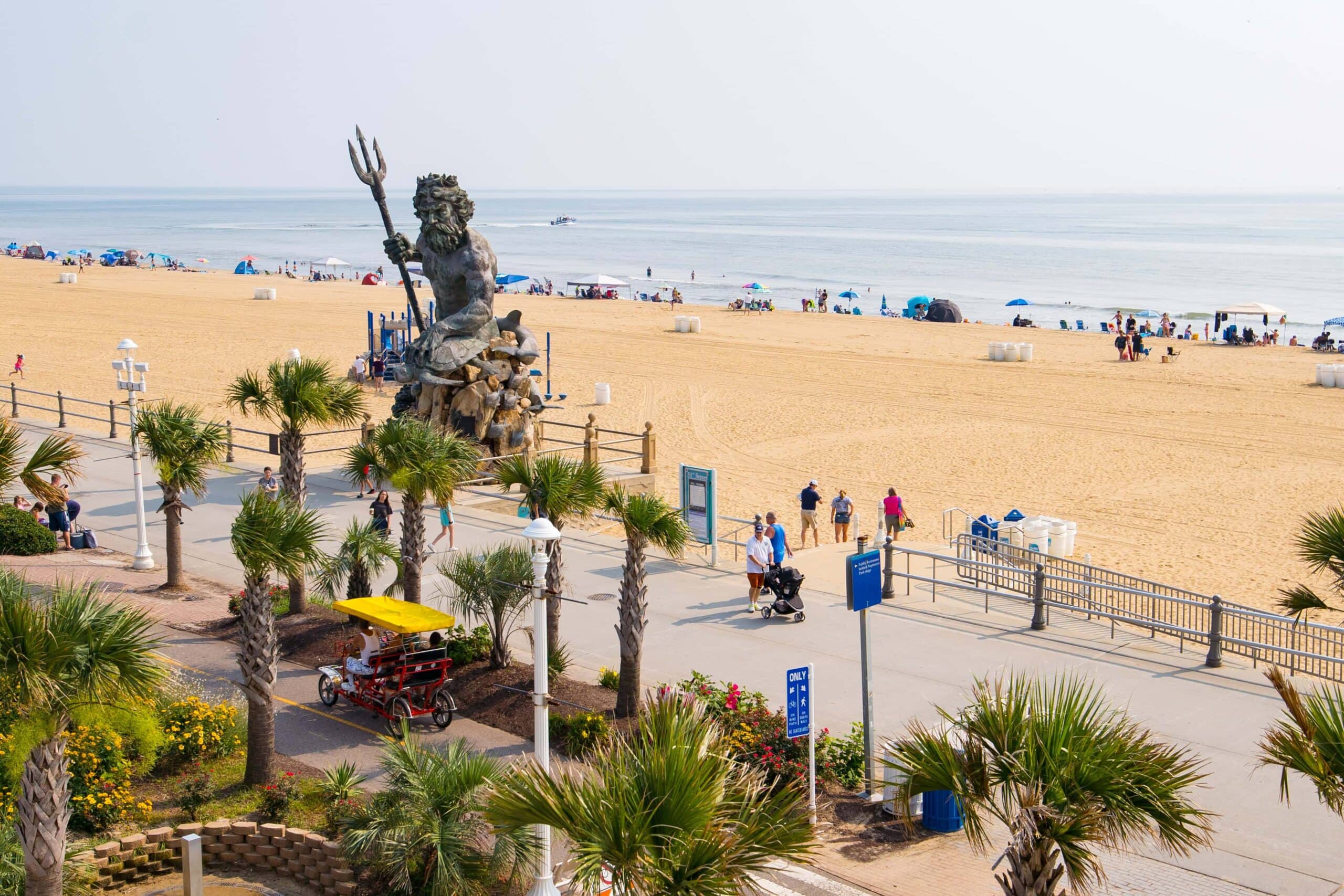
Virginia Beach Tourism Web Design: What Hospitality Sites Actually Need
Sixteen million tourists per year, thirty five miles of coastline, and most Virginia Beach tourism websites are leaving money on the table. Here is what I see on real audits and what hospitality sites actually need to convert.
7 Best Web Designers in Virginia Beach (2026): An Honest Comparison
An honest comparison of Virginia Beach web designers, from someone who designs and codes Hampton Roads sites for a living rather than reselling them.
Squarespace vs Custom for Virginia Beach Businesses: An Honest Comparison
I have audited many Virginia Beach Squarespace sites. The aesthetic is a real advantage. The ceilings are also real. Here is when Squarespace is the right call and when it costs VB businesses money.