Local SEO for Small Businesses: What I Recommend to Hampton Roads Clients
I run local SEO for Norfolk, Virginia Beach, Chesapeake, Hampton, and Portsmouth small businesses. This is the playbook I actually run, in order, with the time and budget allocations I actually recommend. No fluff, no generic tips.

In this article5 sections
Want help running this? See our local SEO services and pricing, month to month with no contract.
I do local SEO for small businesses across Hampton Roads. Norfolk service businesses, Virginia Beach tourism and retail, Chesapeake home services, Hampton aerospace, Portsmouth maritime, and everything in between. The same playbook works across all of them with city specific adjustments.
This is the actual playbook I run. Not generic "best practices." The specific moves, in order, with the time and budget I recommend.
Want help running local SEO for your Hampton Roads business? See our SEO services or get a free audit.
The Local SEO Order Of Operations#
Most local SEO content lists fifteen things to do and implies you should do them all in parallel. That is wrong. The order matters because some moves unlock others. Here is the order I run for new clients.
Phase 1: Google Business Profile First (Weeks 1 to 2)#
GBP carries most of the weight for local pack visibility, especially in Hampton Roads where the local pack drives a significant share of service business traffic. Every other move you make in local SEO is multiplied by how complete your GBP is.
What to do:
- Claim and verify your GBP if you have not.
- Pick the right primary category. This is the single highest leverage decision. Be specific. "Pizza Restaurant" outperforms "Restaurant" for pizza searches. "Family Lawyer" outperforms "Lawyer" for family law searches.
- Add up to nine secondary categories that genuinely fit.
- Complete the business description (750 characters). Use it strategically. Mention your city, your specialty, your differentiators.
- Add all services with descriptions.
- Add products if applicable.
- Set hours accurately. Update for holidays.
- Add attributes (women owned, veteran owned, wheelchair accessible, etc.).
- Upload 20 plus real photos. Exterior, interior, team, work in progress, products. Geotagged.
- Post weekly. Offers, events, updates, news.
- Populate Q&A with the questions customers actually ask.
- Respond to every review within 48 hours. Always.
Time: 4 to 8 hours upfront, plus 30 to 60 minutes per week ongoing.
I have audited Hampton Roads GBPs that are 30 percent complete. Bringing them to 100 percent typically produces map pack movement within 4 to 8 weeks with no other changes.
Phase 2: On Site Local SEO (Weeks 2 to 4)#
With GBP solid, the website becomes the next leverage point.
What to do:
- LocalBusiness schema markup. On the homepage with addressLocality, geo coordinates, opening hours, image references, telephone, areaServed.
- NAP consistency. Your business name, address, and phone must match exactly across the website, GBP, and all citations. "Suite 100" vs "#100" vs "Ste 100" all count as different to Google.
- City and service area pages. Real pages, not templated stubs. Include unique content about each city or neighborhood you serve. That is why our page on local SEO for Suffolk service businesses reads nothing like a city name dropped into a template.
- Service pages with Service schema. Each service gets its own page with proper schema.
- FAQ section with FAQPage schema. Real questions, real answers.
- Mobile speed under 3 seconds. Often the limiting factor for local rankings.
- HTTPS, no mixed content errors. Default expectation in 2026.
Time: 8 to 20 hours depending on site size.
Phase 3: Reviews And Citations (Ongoing)#
Volume velocity and quality of reviews directly affect both map pack rank and conversion. Citations help with NAP authority.
Reviews:
- Ask every satisfied customer to leave a Google review. After a positive interaction. Use a short link.
- Train your team to ask. Not all of them, just the customer facing ones.
- Respond to every review (positive and negative) within 48 hours.
- Address negative reviews professionally. Take it offline if needed.
- Target 5 to 15 new reviews per month for most small businesses.
- Avoid review gating (only soliciting from happy customers) which Google penalizes.
Citations:
- Google Business Profile, Bing Places, Apple Maps, Yelp. These are mandatory.
- Your industry specific directories. Avvo for lawyers, Healthgrades for doctors, Houzz for home services.
- Local: Chamber of Commerce, your local Better Business Bureau, your BID or business association.
- Stop after the 25 to 50 highest authority citations. Beyond that, returns diminish.
Time: 1 to 3 hours per week ongoing.
Phase 4: Local Content (Weeks 4 to 12)#
Content that targets local searches and demonstrates local knowledge.
Types of content that work:
- Neighborhood guides (for service businesses serving multiple Hampton Roads cities)
- Service plus city content ("HVAC repair in Chesapeake" not "HVAC repair tips")
- Local industry insights (Norfolk defense contractor trends, Virginia Beach tourism patterns)
- Local case studies and project showcases
- Local news coverage if appropriate
What does not work:
- Generic blog posts that any business in any city could publish
- Keyword stuffed content
- AI generated commodity content with no first hand experience
Time: 4 to 8 hours per piece, targeting 1 to 4 pieces per month depending on business size.
Phase 5: Local Link Building (Months 3+)#
Real local links are harder than spam links but worth ten times more.
What works:
- Local chamber of commerce membership
- Local business association memberships
- Sponsoring a local event, sports team, or non profit (with link)
- Local press coverage (real stories, not paid placements)
- Guest posts on local industry blogs
- Local podcast appearances
What does not work:
- Buying backlinks from "SEO services" sellers (PBN risk)
- Forum and comment spam
- Random directory submissions
- Reciprocal link schemes
Time: 1 to 3 hours per week ongoing.
Hampton Roads Specific Adjustments#
The playbook is the same across cities. The specifics differ.
Norfolk: Most competitive SERP for SEO services (TechArk dominates). Defense and maritime industries require specialized content. Map pack matters heavily for service businesses.
Virginia Beach: Most competitive SERP for web design (Bryant Digital dominates). Dual audience (residents and 16 million annual tourists). Seasonal patterns matter for tourism and hospitality. Winning here means our Virginia Beach web development has to compete on design and positioning, not just keywords.
Chesapeake: Least contested SEO market in the region. Highest median income. Neighborhood content (Greenbrier, Great Bridge, Western Branch, Deep Creek) returns disproportionately.
Hampton: Peninsula focus matters (different SERPs from the Southside). NASA Langley aerospace contractors need specialized content. Lower competition than Norfolk or VB, and neighboring Newport News shares the same Peninsula dynamic, which is why we treat Newport News SEO as its own market rather than a Southside afterthought.
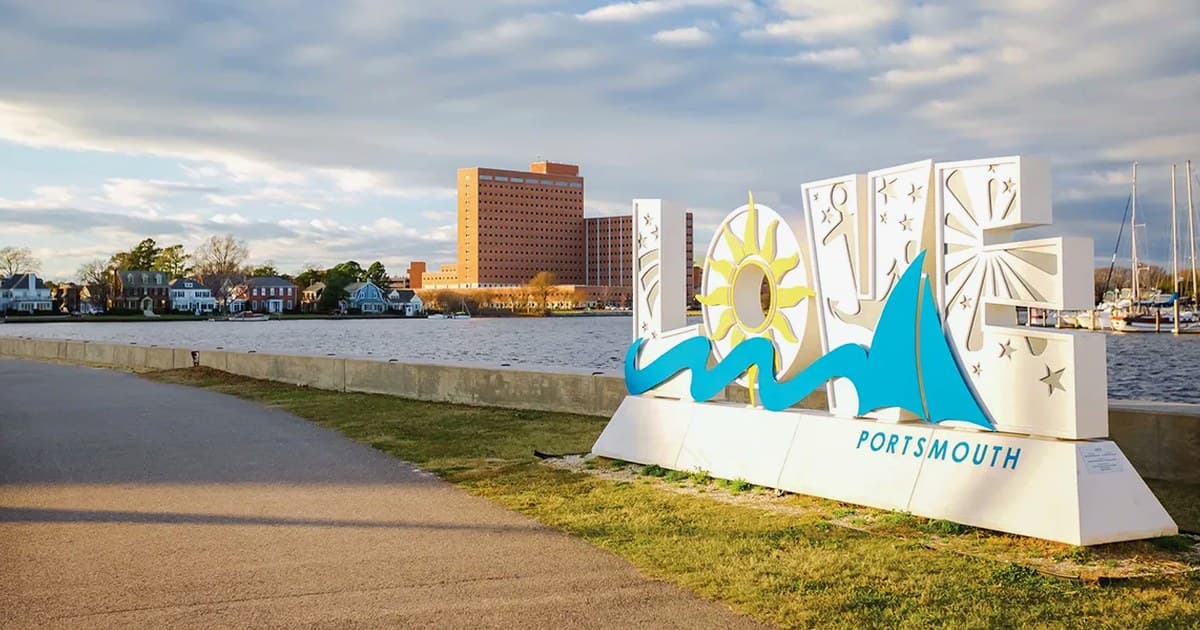
Portsmouth: Lowest competition in the region. Naval shipyard contractor focus. Olde Towne hospitality. Most regional agencies ignore Portsmouth, which is the opportunity.
What Local SEO Actually Costs#
DIY: 4 to 8 hours per week of your time, $0 to $250 per month in tool subscriptions.
Foundation tier professional SEO: $750 per month. Best for small Hampton Roads businesses with focused service categories.
Growth tier: $1,500 per month. Adds content production, link building, multi neighborhood coverage, and quarterly strategy.
Domination tier: $2,500 per month. Adds AI search optimization, competitor monitoring, technical audits, CRO, and monthly strategy.
Detailed breakdown by service: Our pricing page.
Common Mistakes I See In Hampton Roads#
- No GBP or 40 percent complete GBP. The fastest fix in local SEO.
- Inconsistent NAP across the web. Confuses Google, dilutes authority.
- Thin service area pages. Templated stubs with the city name swapped. Google penalizes.
- Buying backlinks from cheap services. Always traces back to PBNs. Manual action risk.
- Generic content with no local angle. Wastes the opportunity to demonstrate local expertise.
- Ignoring reviews or responding only to positive ones. Both hurt rankings and conversion.
- No schema markup. Free competitive moat, almost universally missing.
Frequently Asked Questions#
How long does local SEO take to work in Hampton Roads?
Map pack and GBP changes: 4 to 8 weeks. Organic ranking improvements on city specific queries: 3 to 6 months. Competing for top positions on the most contested terms: 9 to 18 months.
Do I need professional help or can I DIY local SEO?
DIY works for the first 3 to 6 months if you have time. After that, the opportunity cost usually favors hiring help. Detail in DIY vs Professional SEO.
Will AI search replace local SEO?
Local SEO is becoming more important, not less. AI Overviews cite local businesses when users ask local questions ("best plumber in norfolk," "things to do in virginia beach"). The businesses cited are typically those with strong traditional local SEO (GBP, reviews, schema, content).
What is the single highest leverage local SEO move?
For most Hampton Roads businesses, completing Google Business Profile to 100 percent. It is free, it carries the most weight, and most businesses underuse it.
Do I need a website if I have a strong GBP?
GBP and a website serve different roles. GBP drives the local pack. Your website drives organic search results, conversion from GBP clicks, and credibility. You need both.
How many reviews do I need for my Hampton Roads business?
More than your direct competitors in the same map pack. For most service categories that means 50 to 200 reviews. The velocity matters more than the absolute count. 5 to 15 new reviews per month signals an active business.
Should I respond to negative reviews?
Always. Professionally, factually, briefly. Acknowledge the issue, offer to resolve offline, do not get into a public argument. The response is for the next prospective customer reading, not for the reviewer.
Ready to run local SEO that actually works for your Hampton Roads business? Get a free audit of your current local SEO, or see our SEO services.
Related reading:
Want a straight answer on your rankings?
I wrote this, and I am the one who would do the work. Send me your site and I will send back a plain English audit within 48 hours, free, no obligation.
SEO from $750 a month, month to month, no contract. Websites fixed price from $2,500.
Nick Mangubat, founder.Based in Norfolk. You work with me directly.
Related articles
How to Audit Your Website With Free SEO Tools (From Someone Who Built One)
The free SEO audit tools I actually use and the exact order to run them in, from the developer of an SEO audit toolkit with 114 plus analyzers.

What Does an SEO Retainer Actually Buy? A Month by Month Breakdown
I see SEO retainers from both sides: I work inside a 950 person agency by day and run my own Norfolk shop at night. Here is a plain, month by month breakdown of what a real SEO retainer buys, what it should never be, and how to audit the one you are paying for right now.
Boutique vs Big Agency: Choosing a Web + SEO Partner for a Local Service Business
I spend my days inside a 950 person agency and my nights running a boutique. Here is the honest tradeoff between the two models for a local service business, and how to choose the right partner for your web and SEO work.